

Lyceum Digest #18
A digest dedicated to America's 250th featuring thoughts on the American mind, independence, Lincoln's Gettysburg Address, the relationship between philosophy & politics, and more.
Welcome to our Friday Digest, a bi-weekly email newsletter designed to showcase everything we have published on the Substack over the past two weeks. Below you will find links to our most recent posts. Happy reading and 4th of July!
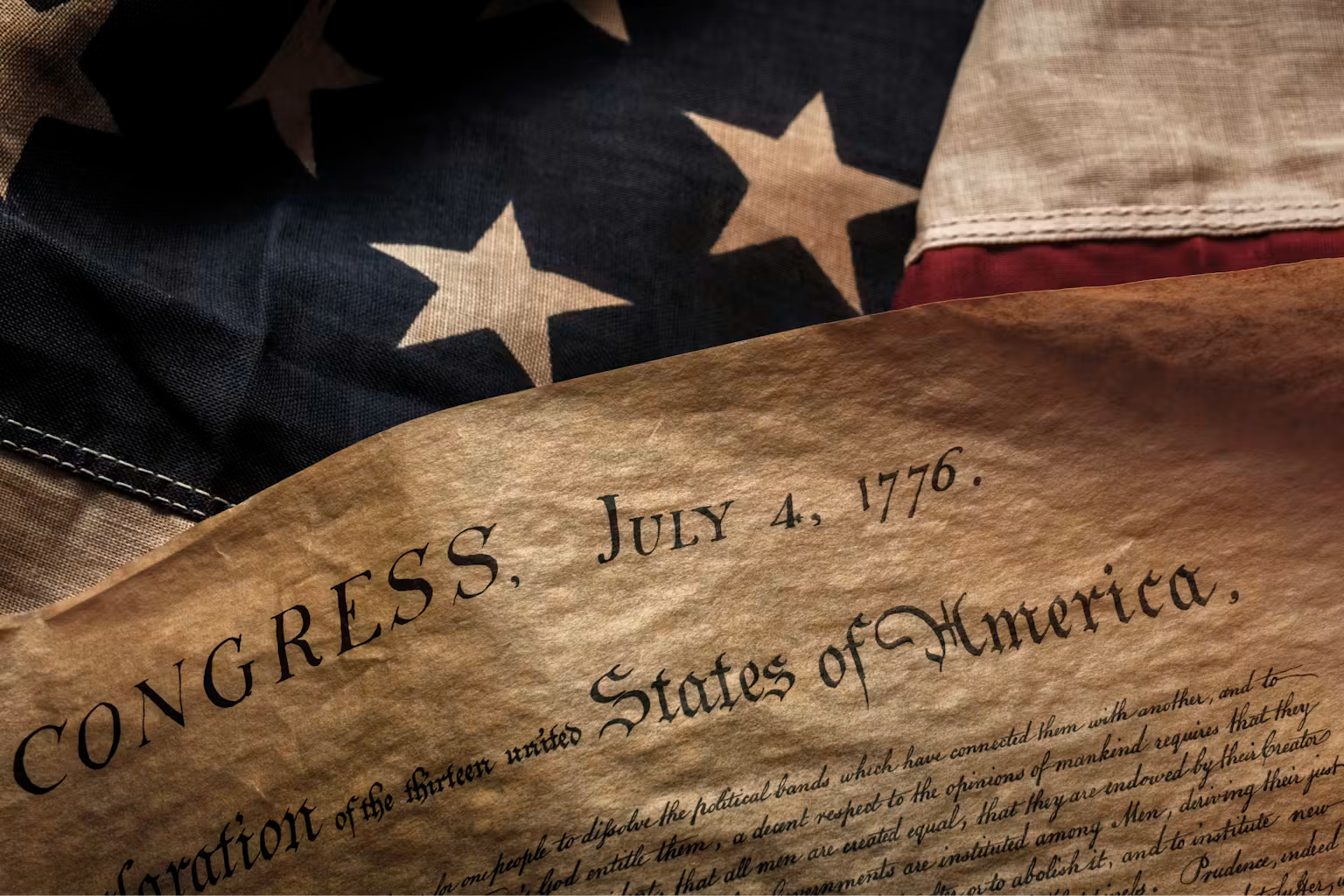
Reflections on How America Achieved Independence
Reflecting this year on the semi-quincentennial of American independence, many across the country have naturally turned to the justly celebrated Declaration of Independence. The soaring rhetoric and memorable phrasing came largely from the hand of Thomas Jefferson, but the ideas, according to Jefferson himself, were not “new principles, or new arguments, never before thought of…” Click here to read on…A Few Reflections Centered on “The Gettysburg Address”
In The Lyceum Address, which he delivered in 1838, a young Abraham Lincoln worried that memories of the founding generation had begun to fade, and about growing lawlessness throughout the land. He therefore spoke of venerating anew the old laws that the Founding Fathers had given to the nation, to revive the spirit of 1776. Click here to read on…Our Forgotten History
Carlo Botta’s “History of the War of Independence” is our nation’s forgotten treasure, and it attests to the universality of those truths that the American revolutionaries took to be “self-evident” and applicable to all men in all times and all places, regardless of nationality, race, or origin. Click here to read on…The American Founding, Philosophy, and Rule
The philosophic dimensions of the revolution are worth pondering as the United States celebrates the 250th anniversary of its founding. For today, more than other times in my life, it occurs to me that the American Founding embodies a distinct answer to an enduring question first posed by Plato about the relationship between philosophy and politics. Click here to read on…Germans and Americans: A Reflection on the Enlightenment and Political Realities
The Americans and the Germans are different people. They certainly were different in the eighteenth century and, despite some perhaps newfound similarities, they remain different. But something that seemingly united them in the eighteenth century was a fervor for the Enlightenment, for a new kind of political life, whether discovered or invented, which promised to make men free—which is to say to make men most capable of being men in the proper sense. And so it is instructive to think about the German example in comparison with our own. Click here to read on…