

Has Liberalism Failed?
“The American constitutional order was explicitly designed to function without the requirement of virtue on the part of either its leaders or its citizens."
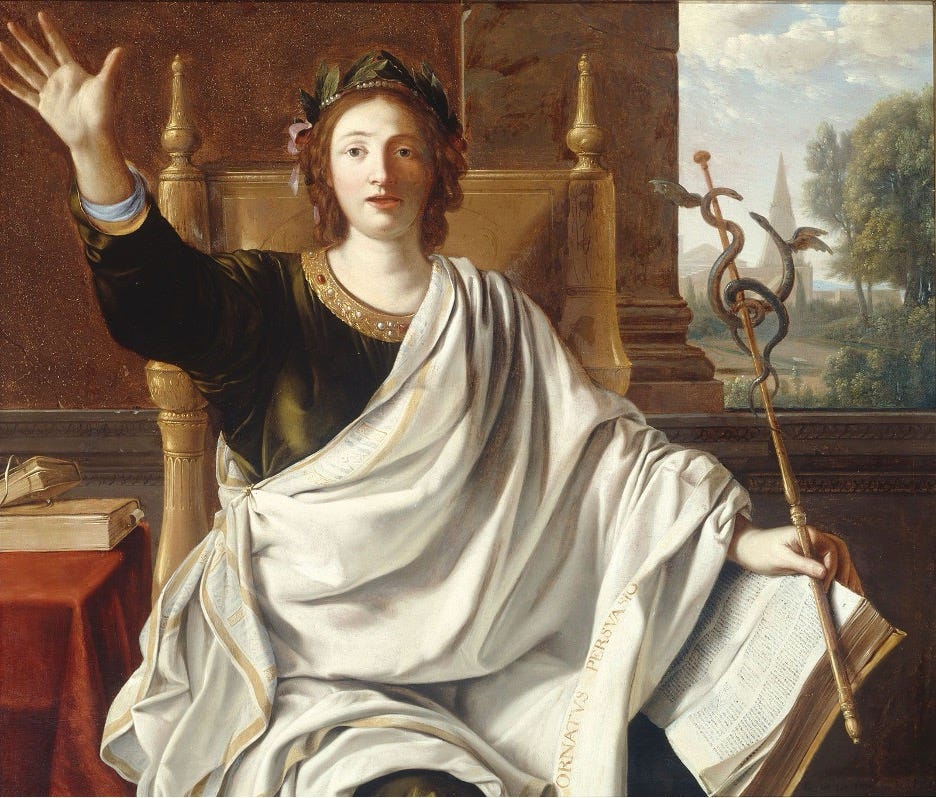
“The American constitutional order was explicitly designed to function without the requirement of virtue on the part of either its leaders or its citizens. As James Madison famously argued in Federalist no. 51, the ‘defect’ of human nature could be supplied by the ‘opposite and rival interests’ of institutional design…The architecture was built to withstand a population devoid of public spirit.”
—Patrick Deneen, Why Liberalism Failed, Chapter 6
Patrick Deneen posits that “liberalism,” and America in particular as the only nation founded on liberal principles, was destined to fail. He argues that the American Revolutionaries and Founders did not believe that virtue or good character was necessary, but that institutional “checks and balances” on power were sufficient for good government and human happiness.
What, then, should we make of the following quotations from the time of the American Revolution and Founding?
“I know some say, let us have good laws and no matter for the men that execute them. But let them consider that though good laws do well, good men do better; for good laws may want good men, and be abolished or invaded by ill men; but good men will never want good laws, nor suffer ill ones. ‘Tis true, good laws have some awe upon ill ministers, but that is where they have not power to escape or abolish them, and the people are generally wise and good; but a loose and depraved people (which is to the question) love laws and an administration like themselves. That, therefore, which makes a good constitution, must keep it; viz., men of wisdom and virtue, qualities that because they descend not with worldly inheritances, must be carefully propagated by a virtuous education of youth, for which after ages will owe more to the care and prudence of founders, and the successive magistracy, than to their parents for their private patrimonies.”
—William Penn, Preface to the First Frame of Government of Pennsylvania
“That no free government, or the blessings of liberty, can be preserved to any people, but by a firm adherence to justice, moderation, temperance, frugality, and virtue, and by frequent recurrence to fundamental principles.”
—Virginia Declaration of Rights (1776), Section XV
“That a frequent recurrence to fundamental principles, and a firm adherence to justice, moderation, temperance, industry, and frugality are absolutely necessary to preserve the blessings of liberty, and keep a government free: The people ought therefore to pay particular attention to these points in the choice of officers and representatives.”
—Pennsylvania Constitution (1776), Declaration of Rights, Section XIV
“That frequent recurrence to fundamental principles, and a firm adherence to justice, moderation, temperance, industry and frugality, are absolutely necessary to preserve the blessings of liberty, and keep government free.”
—Vermont Constitution (1777), Declaration of Rights, Section XVI
“A frequent recurrence to the fundamental principles of the constitution, and a constant adherence to those of piety, justice, moderation, temperance, industry and frugality, are absolutely necessary to preserve the advantages of liberty, and to maintain a free government…The people ought, consequently, to have a particular attention to all those principles, in the choice of their officers and representatives: and they have a right to require of their lawgivers and magistrates, an exact and constant observance of them.”
—Massachusetts Constitution (1780), Part I, Article XVIII
“A frequent recurrence to the fundamental principles of the constitution, and a constant adherence to justice, moderation, temperance, industry, and frugality, are absolutely necessary to preserve the blessings of liberty and keep a government free.”
—New Hampshire Constitution (1784), Part I, Article XXXVIII
“[T]he happiness of a people, and the good order and preservation of civil government, essentially depend upon piety, religion and morality.”
—Massachusetts Constitution (1780), Part I, Article III
Did the Americans believe that freedom could exist without “virtue on the part of either its leaders or its citizens,” as Deneen argues? If not, to what extent did the Americans believe that freedom required virtue and moral character? What particular virtues did the Americans hold as necessary for the maintenance of free government? Are those virtues different from those that the writers of antiquity believed are necessary for moral character?
It's really sad how little of our education these days is built on illustrating to the younger generations what it means to have virtue and its benefits. A reason for that is because people have differing ideas of what good virtue and morality are these days. To this article's point, I do think there is a situation where liberalism keeps moving itself so far in the same direction that it starts doing harm to itself. Look at the French Revolution as a microcosm of that.